In Part 1 of this series, we defined the technical infrastructure. Today, we dive into the psychology of inventory. Most entrepreneurs fail because they try to sell “everything” without a system. The key to success isn’t volume; it’s strategic linearity.
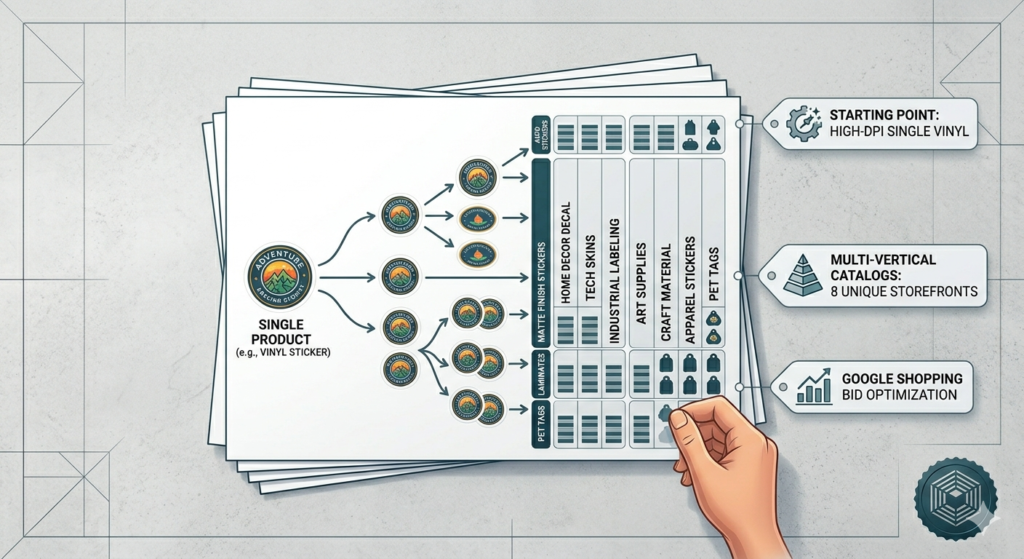
To scale from a single product to a massive ecosystem, we must look at the giants. Tradeinn didn’t start with 17 stores; it began as Scubastore, a single vertical specializing in diving. Only after they mastered that niche, its processes, and its logistics, did they launch the next one (Trekkinn), and then the next. Each vertical funded the expansion of the previous one.
1. The “Seed Niche” Selection: The Operations Filter
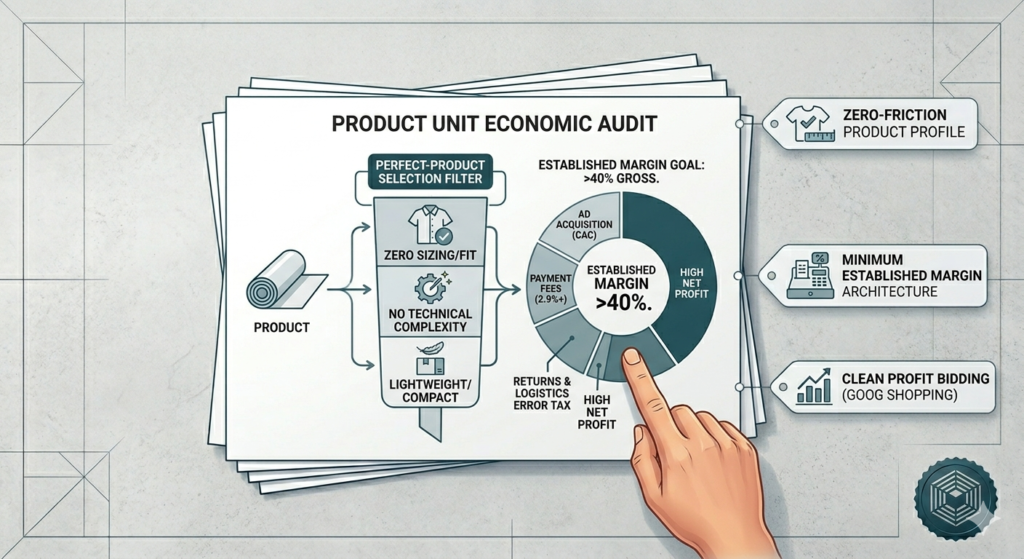
Before launching 8 verticals, the system must validate the first one. The choice isn’t emotional; it’s mathematical and logistical. For the system to be scalable, the initial product must pass through this filter:
- Low Return Rates (The Profit Killer): In the US market, a high return rate destroys ad profitability. We look for products with closed technical specifications (e.g., spare parts, consumables, specific tools). If the user knows exactly what they are receiving, the system doesn’t suffer from “not as described” returns.
- High Shippability & Value Density: The system must prioritize products that are easy to ship and hard to break. If shipping costs exceed 15% of the product’s value, your ability to bid on Google Shopping is drastically reduced.
- Reliable Distributors with Real-Time Stock Feeds: Your system is a database. If the distributor isn’t professional and your stock isn’t synced, Google Merchant Center will penalize you. Architecture starts with supplier reliability.
2. The Tradeinn Strategy: Verticalization vs. Generalism
A beginner’s mistake is creating a “small Amazon.” The successful system consists of creating Authority Silos.
- The Systemic Action: If you sell diving gear and want to expand into mountain climbing, don’t mix them. Create a new vertical. They share the “back-end” (warehouse, payments, shipping), but to Google and the user, you are an absolute specialist in each one.
- Niche Dominance: This allows your ad campaigns to be ultra-specific. A customer looking for a “carbon fin” lands on a store that only appears to sell diving gear, which skyrockets trust and conversion compared to a generic bazaar.
3. Google Shopping as a Catalog Auditor
Your catalog must be designed so that Google’s algorithm can identify your “Profit Heroes.”
- Identifying Ultra-Profitable Products: The system must automatically detect which products have reliable delivery (few delays) and a clean margin.
- Smart Bidding: You don’t bid the same for the entire catalog. The system identifies products with low returns and high turnover to concentrate the budget there. This allows a vertical to be profitable in less than 12 months, giving you the capital to launch the next one.
4. The Next Step: Margin Engineering
Having the right product and catalog structure is only 50% of the battle. In the next post, we will get into the numbers that separate amateurs from businessmen: The established margin.
We will see exactly how to calculate the margin you need for a product to be “eligible” to enter your system, considering the hidden acquisition and logistics costs that most ignore when starting out.